Hosts: Cephalozia (Nowellia) curvifolia and Ptilidium pulcherrimum
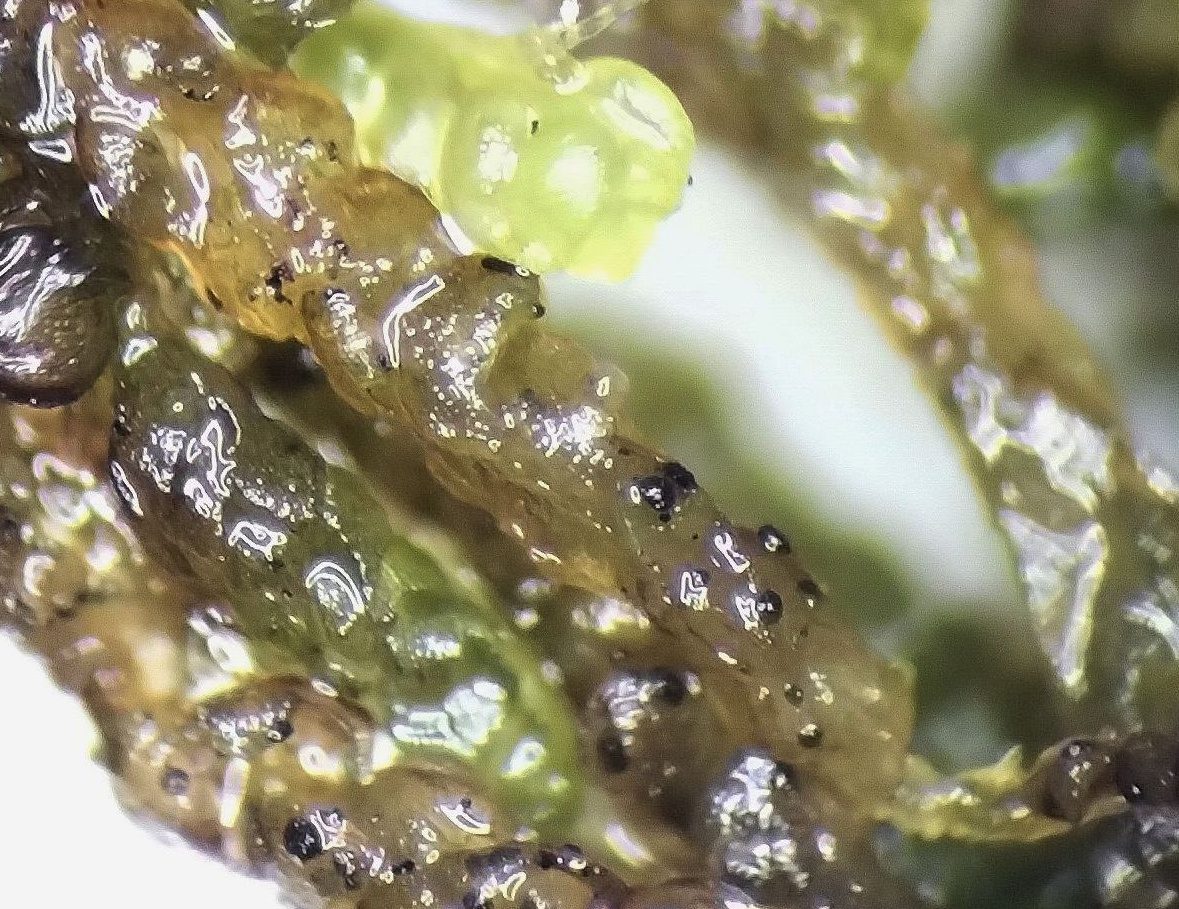
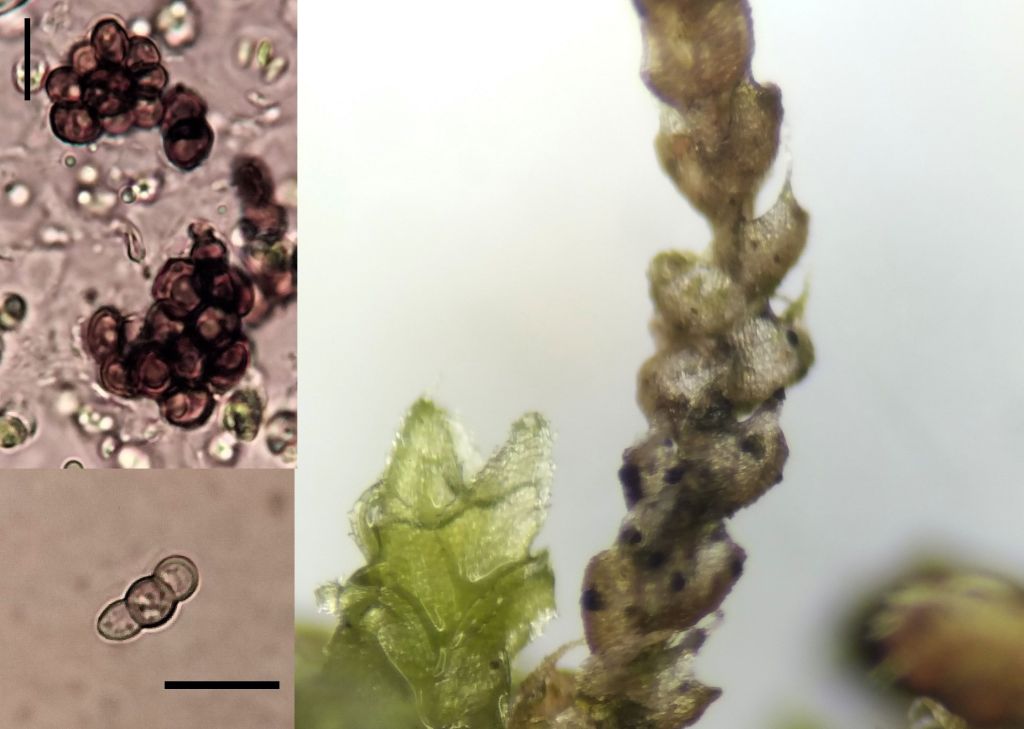
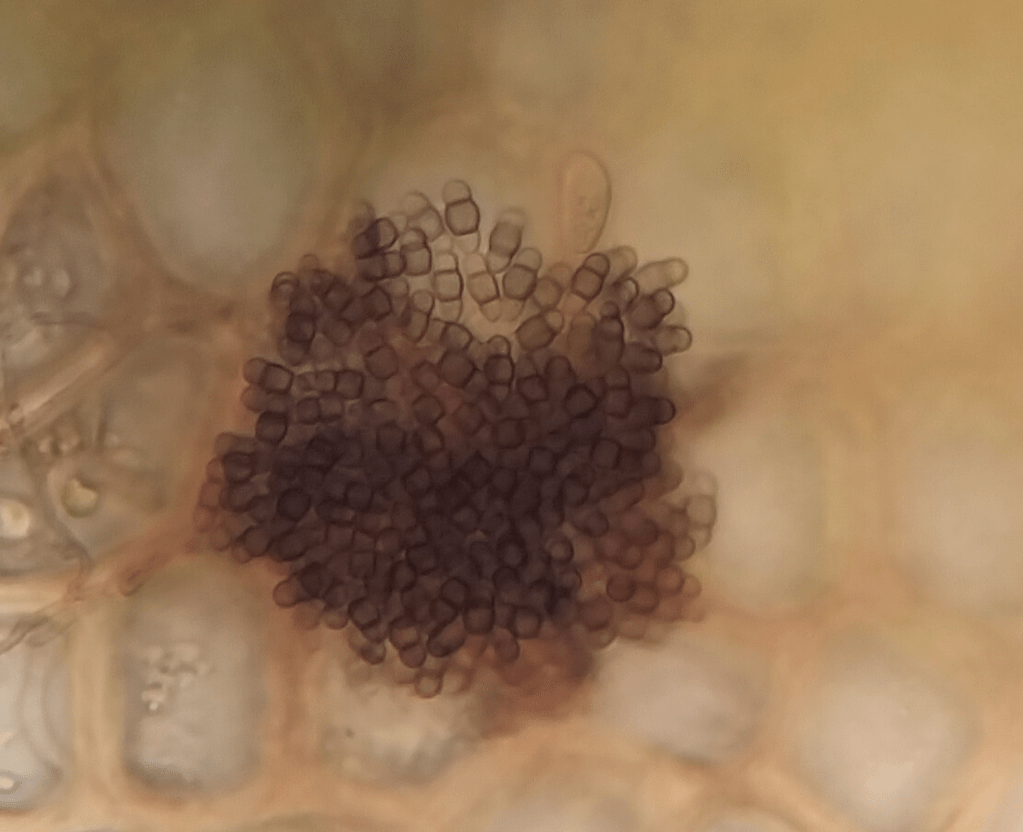
Many thanks to Peter Döbbeler for confirming the identification. The attachment points between the conidiogeneous cells and the conidia were difficult to visualise confidently. It is likely that this fungus is quite common on hosts on rotting wood, so it is worth searching for on the likes of Cephalozia, Lophocolea, etc.
The wide host range may be explained by the possibility that this fungus derives its nutrients from host cuticle / secreted resources. It does not appear to be intracellular. Therefore, putatively, it shares its host niche with the likes of Bryochiton spp. and Lichenopeltella alpestris agg., which similarly have rather wide host ranges, at least under currently accepted species concepts.


 Bryophilous fungi