Fungi associated with bryophytes in the British Isles
Neottiella rutilans
Hosts: Polytrichum juniperinum (most frequently recorded host), P. longisetum and Oligotrichum hercynicum (http://octospora.de/Nrutilans.htm)
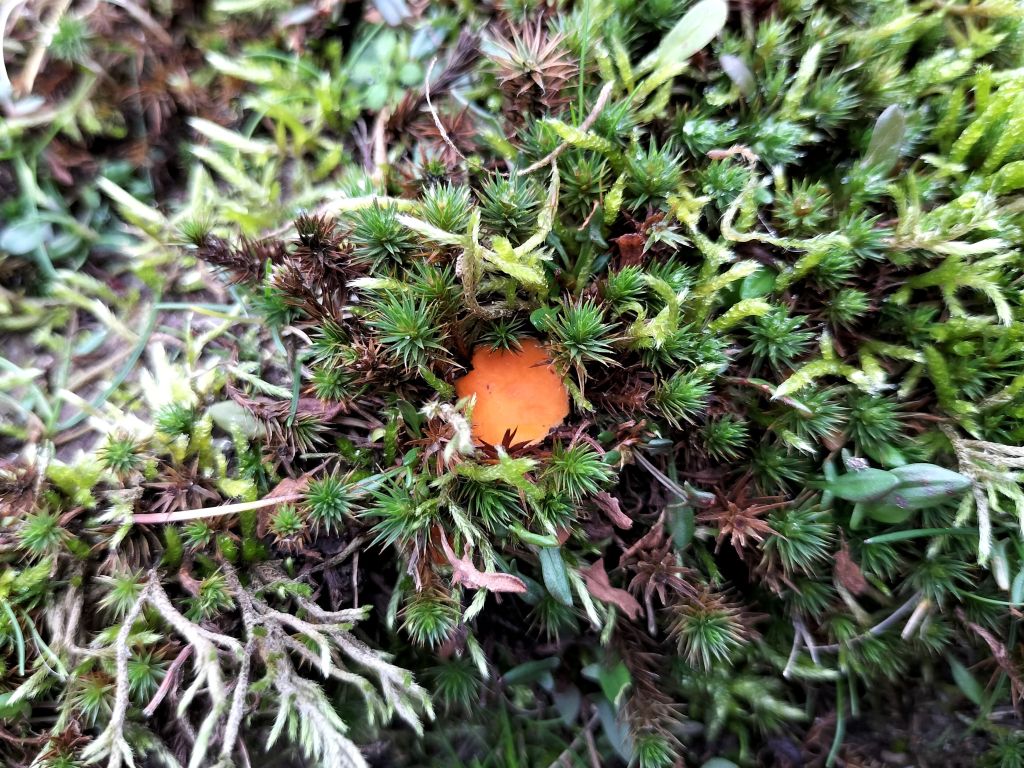
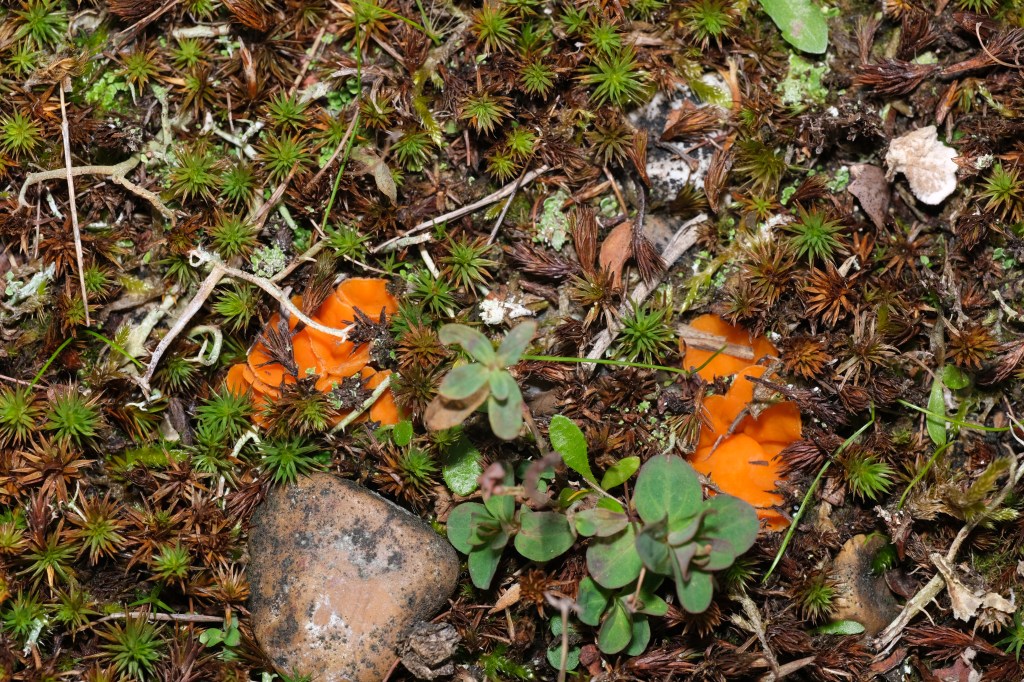
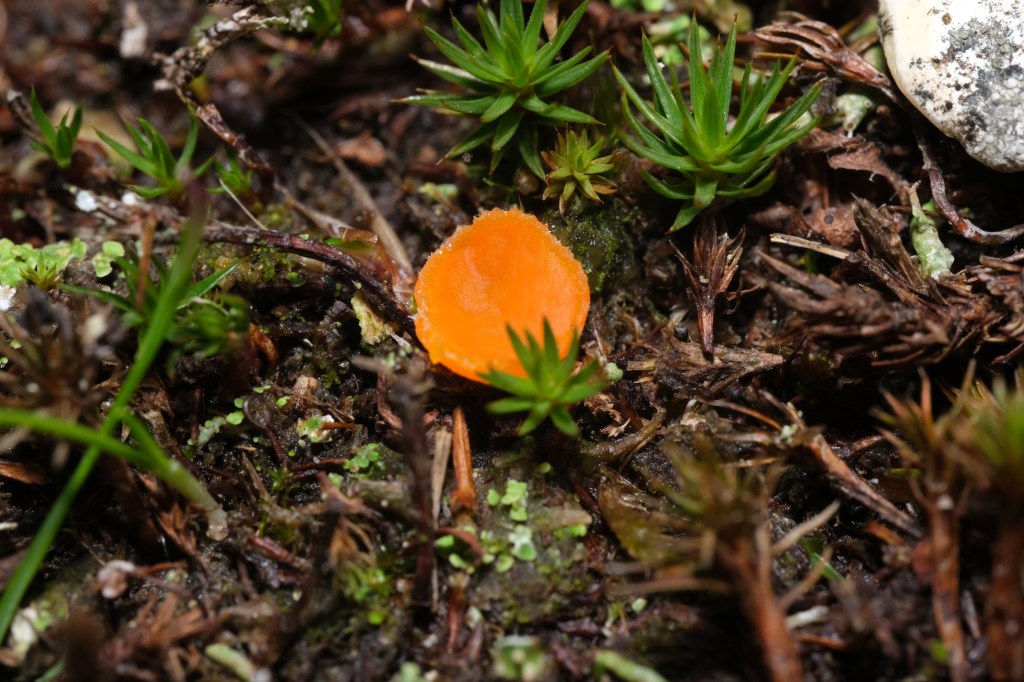
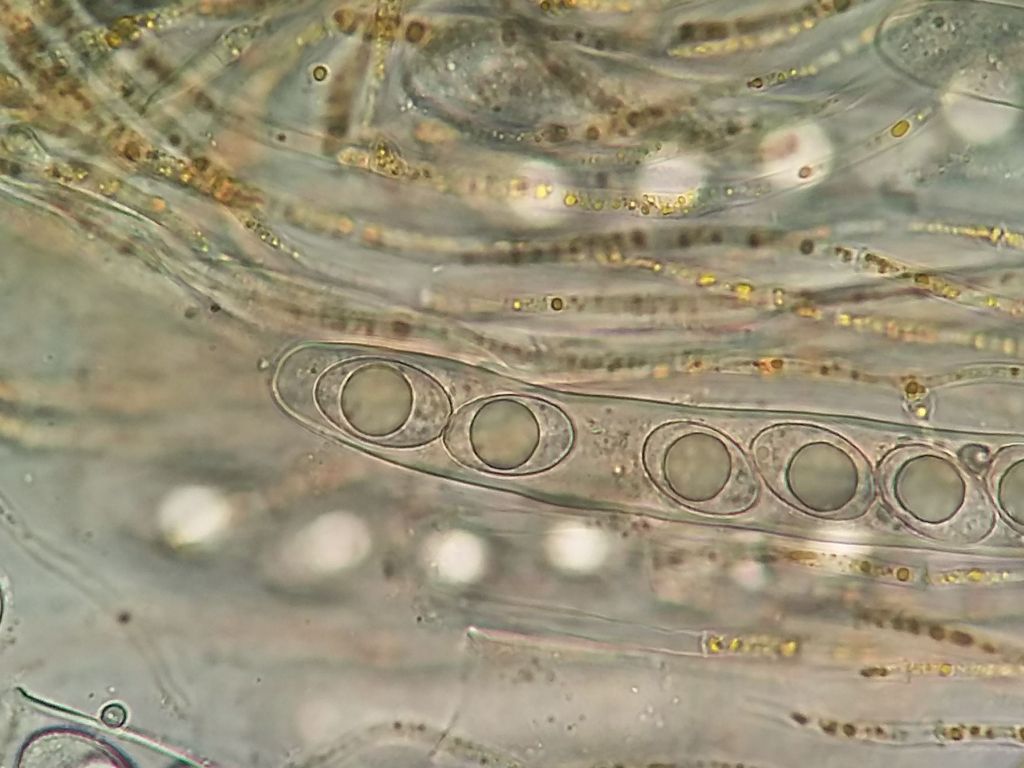
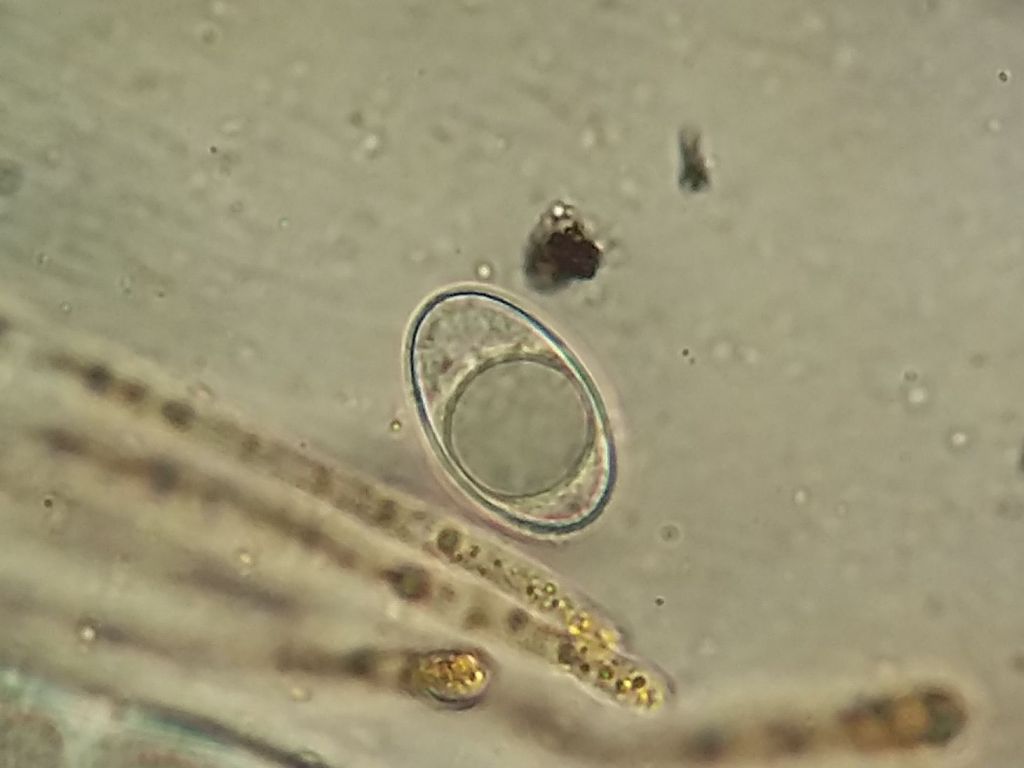
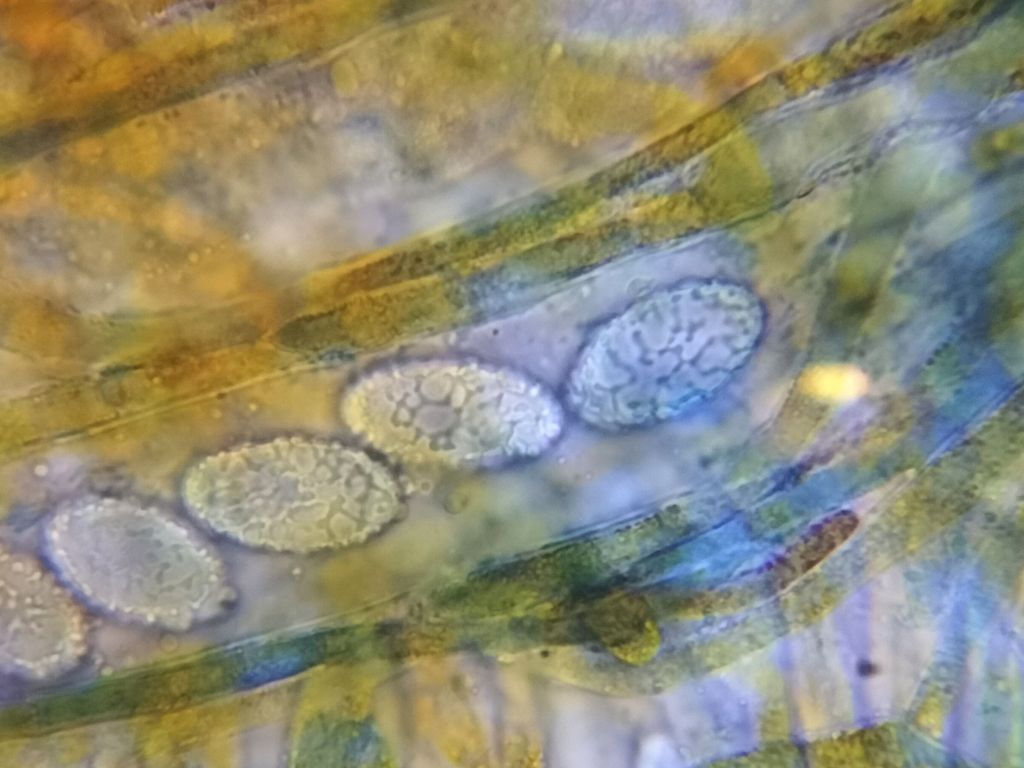
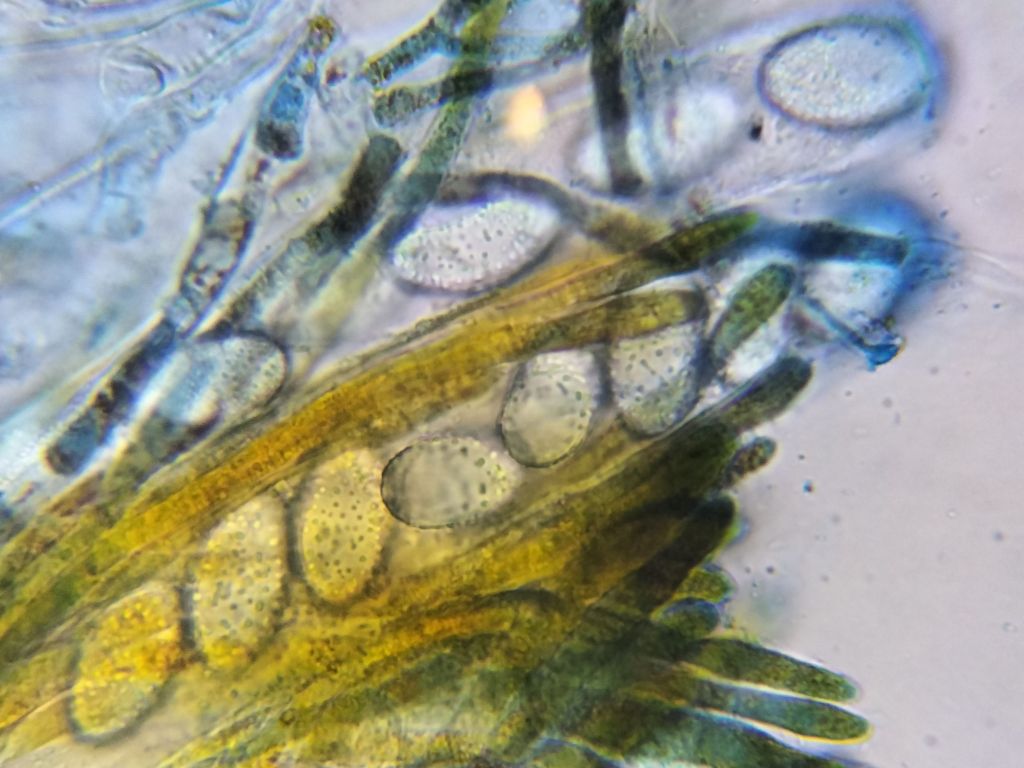
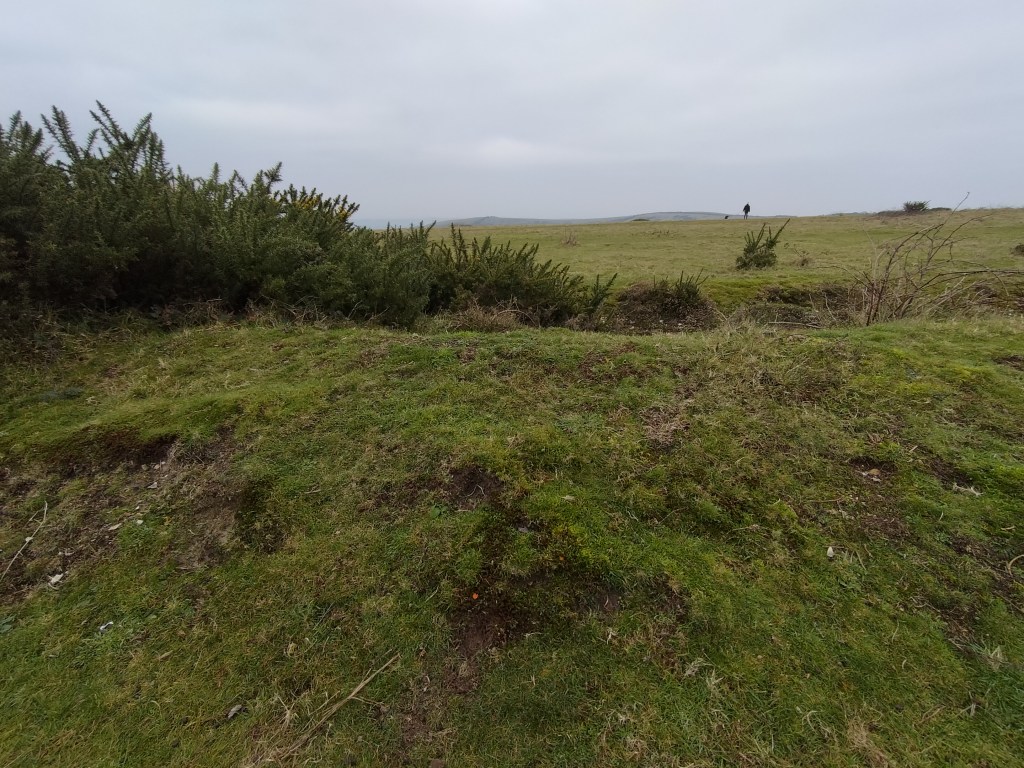
Apothecium within a patch of Polytrichum juniperinum. Ventnor Down, VC10, Jan 2022Apothecia among host shoots. Leg. et det. J. Norton. Photo: kindly provided by J. Norton. VC11, Nov 2021Apothecium among host shoots. Leg. et det. J. Norton. Photo: kindly provided by J. Norton. VC11, Nov 20Ascus with immature in water at 1000X. Material collected by A. Platt Nov 2021Ascospore (not fully mature) in water at 1000X. Material collected by A. Platt Nov 2021Ascospores stained in lactophenol cotton blue under oil immersion lens. Note the reticulate ornamentation of the spores. Material from Ventnor Down, VC10, Jan 2022.Asci containing immature ascospores from the same apothecium as above (Ventnor Down, VC10, Jan 2022). The dintinctive reticulate ornamentation has not yet developed, so these spores appear to have punctate ornamentation like the closely related N. vivda. It is therefore recommended that multiple ascospores are checked, especially mature ones liberated from the asci, to avoid confusion. N. vivida grows on Polytrichum piliferum and apparently not P. juniperinum, with N. rutilans on P. juniperinum and not P. piliferum. But both are able to infect other Polytrichaceae.Habitat shot of Ventnor Down material (Jan 2022) with host on disturbed soil bank.

 Bryophilous fungi