Most bryophilous fungi are very difficult or impossible to spot in the field due to their small sizes, biotrophic mode of parasitism (hosts look normal), being hidden microniches (undersides of leafy liverworts), and being obscured by other debris.
Bryophilous fungi on epiphytic bryophyte hosts
Several species may be spotted in the field, especially necrotrophic parasites that kill their hosts and cause discolouration. Acrospermum adeanum, Bryocentria hypothallina, Ilyonectria sp., and Chromocyphella muscicola, for example, cause conspicuous discoloured necrotic rings on infected hosts, betraying the presence of tiny fruitbodies often near the edges of these rings. Note: many patches should be searched as some hosts will be long dead and without any obvious sign of the fungi that may have killed them in the past.
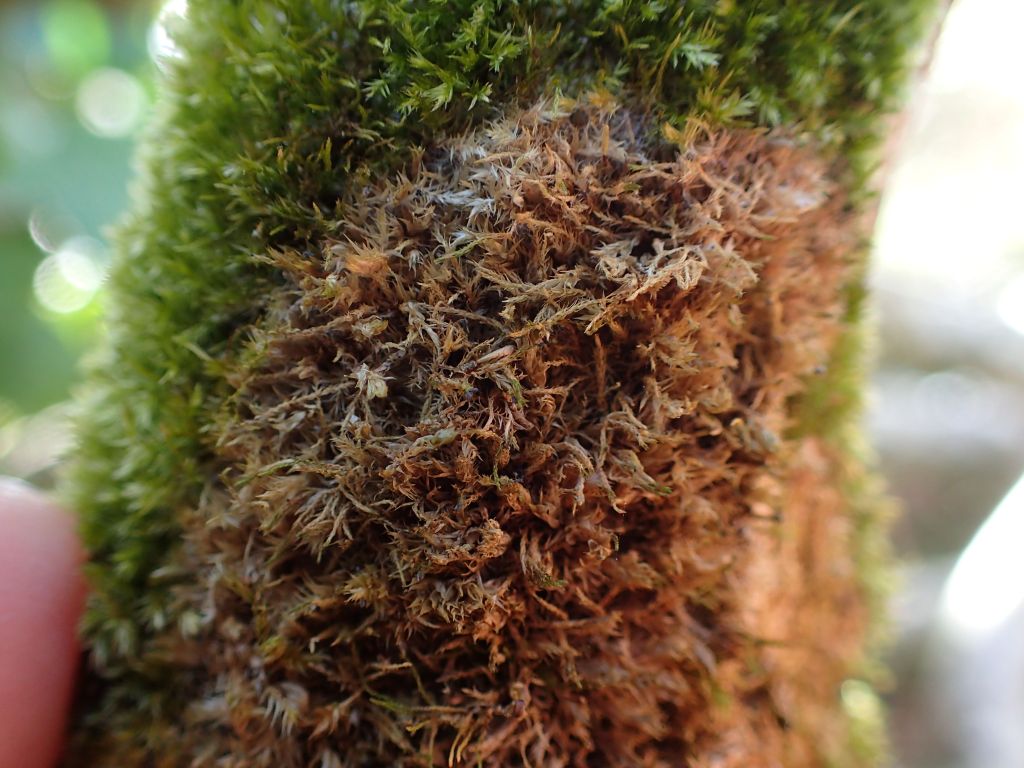
Brightly coloured, orange Hypocreales (and Octosporella spp.) may be spotted on leafy liverwort epiphytes in the field with a good hand lens and plenty of light. Bryocentria brongniartii is a common biotrophic parasite on Frullania dilatata, and its smooth orange spots are sometimes so abundant that they may be seen as flecks to the naked eye. However, some patches of the host plants are naturally red-orange and may confound, along with Trentepohlia algae and reddish invertebrate eggs and mites.

Bryophilous fungi on terricolous hosts
(A) Fungi on shooting systems
The leafy gametophyte tissues of bryophytes are often infected by bryophyte-specific fungi. One of the most obvious to spot in the field is Bryostroma trichostomi on long-lived Pottiaceae. B. trichostomi forms single large, striking, black perithecia that sit on the leaf nerves near the leaf axils. The majority of the nine described Bryostroma taxa have not been found in the British Isles, including the type species B. racomitrii on Racomitrium lanuginosum. That species grows on the shoot tips of its host but is likely fairly inconspicuous.
Sometimes, minute cup fungi can be found on the lower regions of bryophyte shoots. I have found Bryoscyphus “rhombisporum” on old parts of Thuidium tamariscinum shoots, while Pezizella polytrichi has been found on the lower leaves of Polytrichum juniperinum growing in high altitudes in the Cairngorms, Scotland.
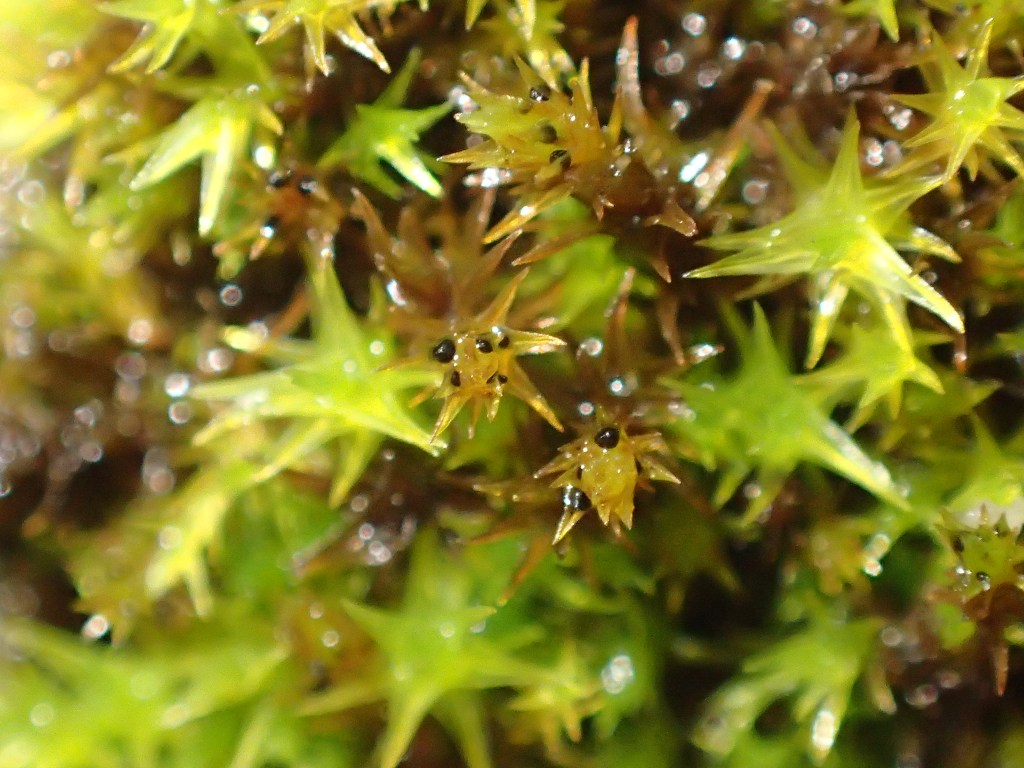
Polytrichaceae are good hosts as their complex leaves provide sustenance and shelter for many fungi. Epibryon interlamellare may be seen with a good hand lens as tiny black spots on old leaves, while the much larger Lizonia emperigonia that grows within the antheridial cups of P. commune may be seen with the naked eye as it turns them black.
(B) Fungi on rooting systems
Species of Octospora, Lamprospora and Neottiella are frequently found among host patches, especially on disturbed soil adjacent to infected plants. The orange, disc-like fruitbodies are very distinctive and the fungi are proving to be highly host specific. Many mycologists are familiar with Neottiella (Octospora) rutilans on Polytrichum juniperinum in heathland, but most other members of this group are far smaller and require one to grovel with their head close to the ground to spot them.
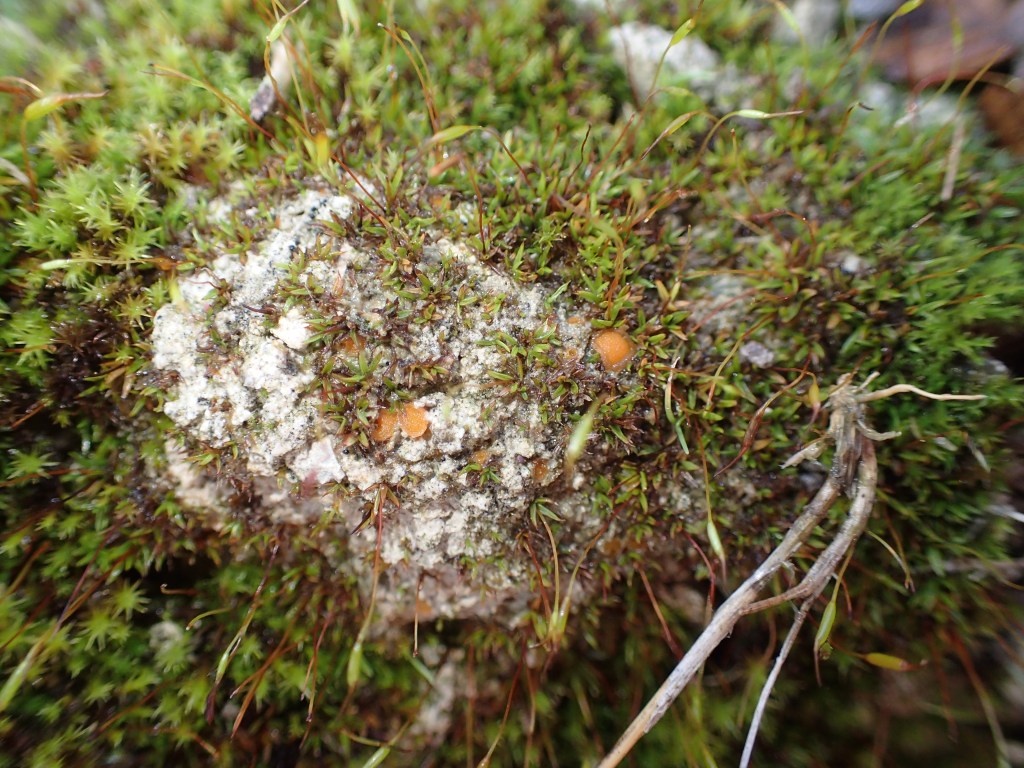
Other members of this group colonise rhizoids on host stems not necessarily in the soil. These include Octospora affinis on Lewinskya (Orthotrichum) affinis, Lamprospora neerlandica on Syntrichia ruraliformis (not yet known in the British Isles), and the newly described O. bicarpa on Orthotrichum speciosum (also not yet known from BI).
 Bryophilous fungi