Hosts: Frullania teneriffae (type), F. tamarisci (collection here)

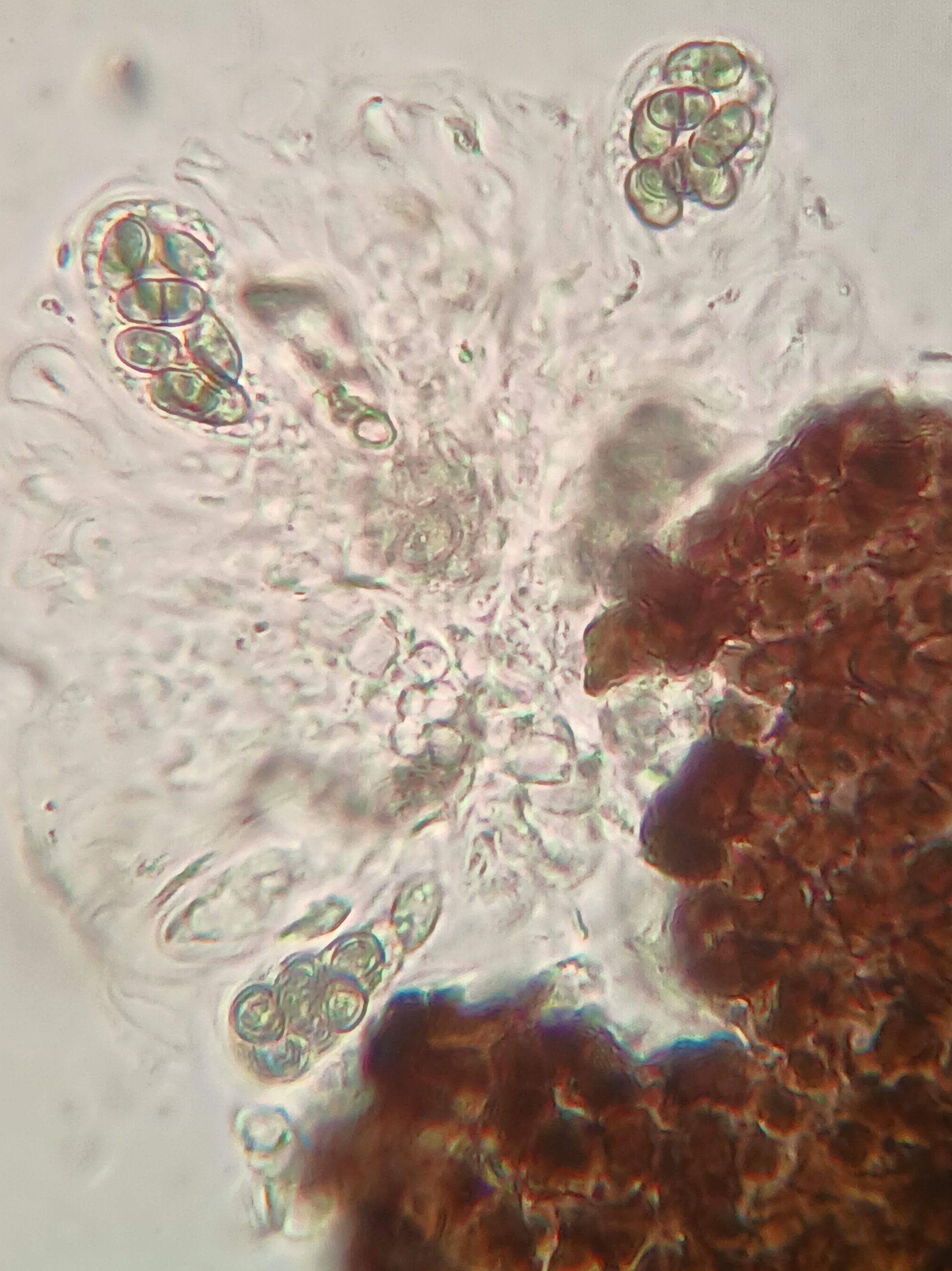
Hypobryon validum Döbbeler. Ascomata 50-80, dark brown / blackish, glabrous. Asci ovate to ellipsoidal, 8-spored initially but fewer ripen ±6. Interascal filaments absent. Ascospores ellipsoidal, (6-)7.5-10(-12) x 3.5-5(5.5), brown, 1-septate. Hyphae brownish, subcuticular or superficial, forming appressoria and haustoria.
Fruitbodies perforate the exposed portions of upper lobes and the perianths.
Only otherwise known from the type collection, which was on hosts inadvertently collected in a packet of Plagiochila in Scotland. It should be looked for along the west coast.
H. poeltii is similar but grows on Porella platyphylla and P. cordaeana. It has never been reported in the British Isles. A link to photographic documentation of a collection: https://dothideomycetes.org/dothideomycetes/dothideomycetes-genera-incertae-sedis/hypobryon/hypobryon-poeltii.html
References
Döbbeler (1983). Hypobryon gen. nov. (Dothideales), eine bemerkenswerte Gattung bryophiler Pyrenomyceten. Nova Hedwigia 37: 1-17.
 Bryophilous fungi