Hosts: Grimmiaceae and Crossidium squamiferum, on the glassy hair points and cuticles of the leaves. Also on Polytrichaceae (P. piliferum), so always worth checking spores.
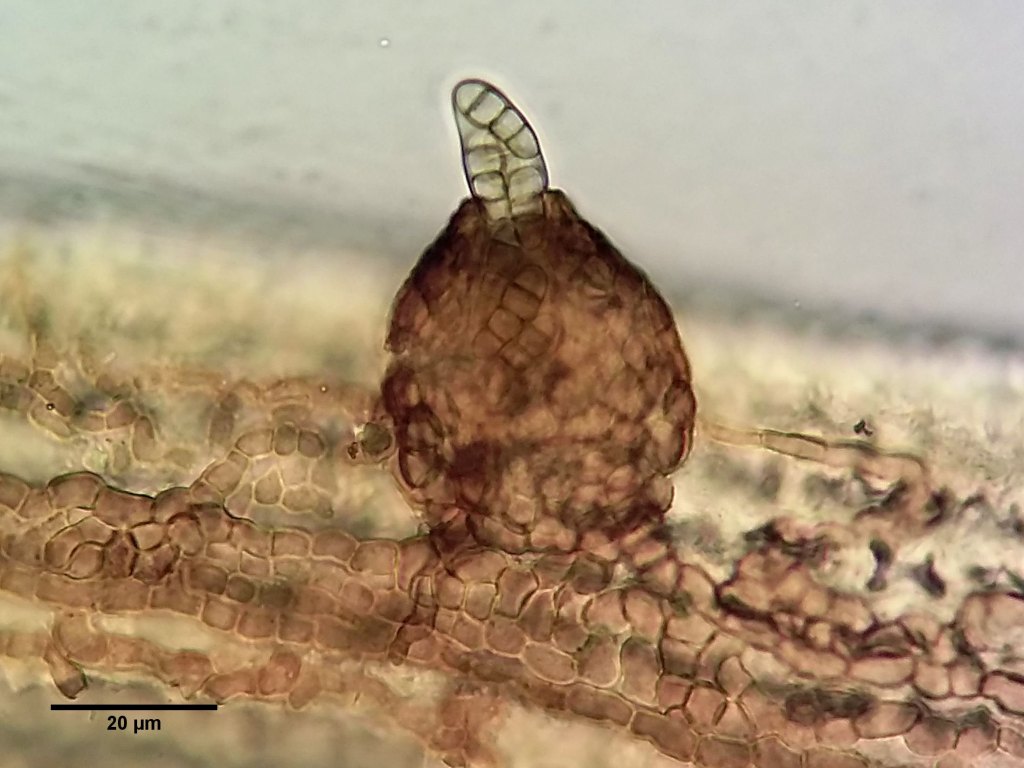
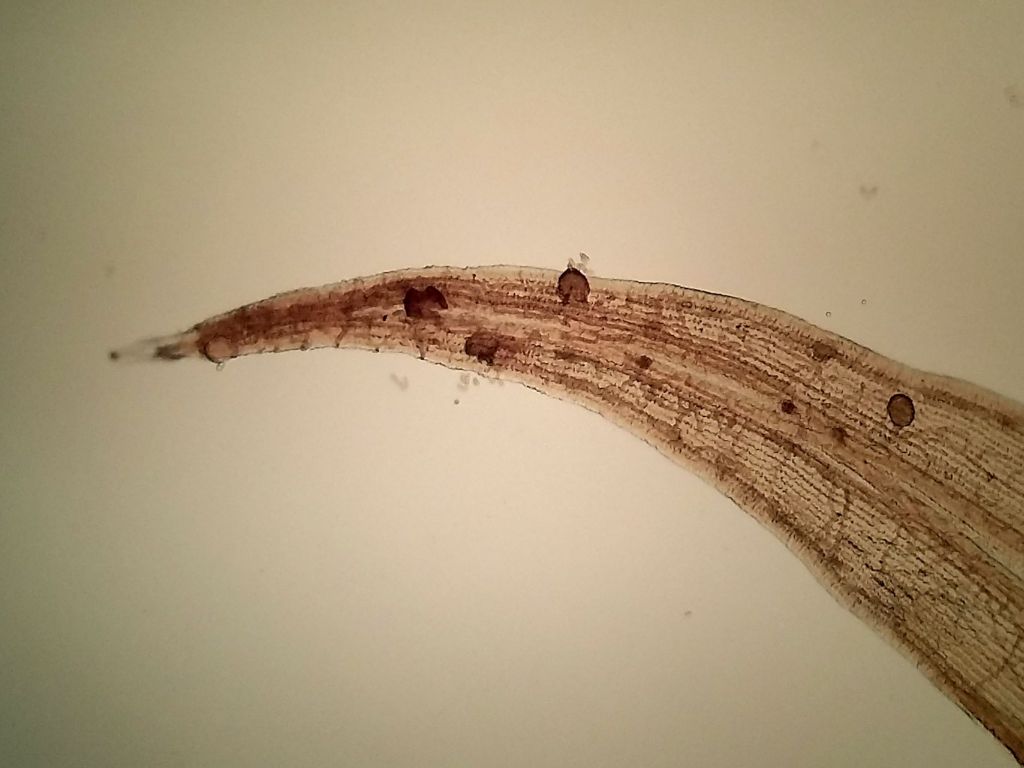

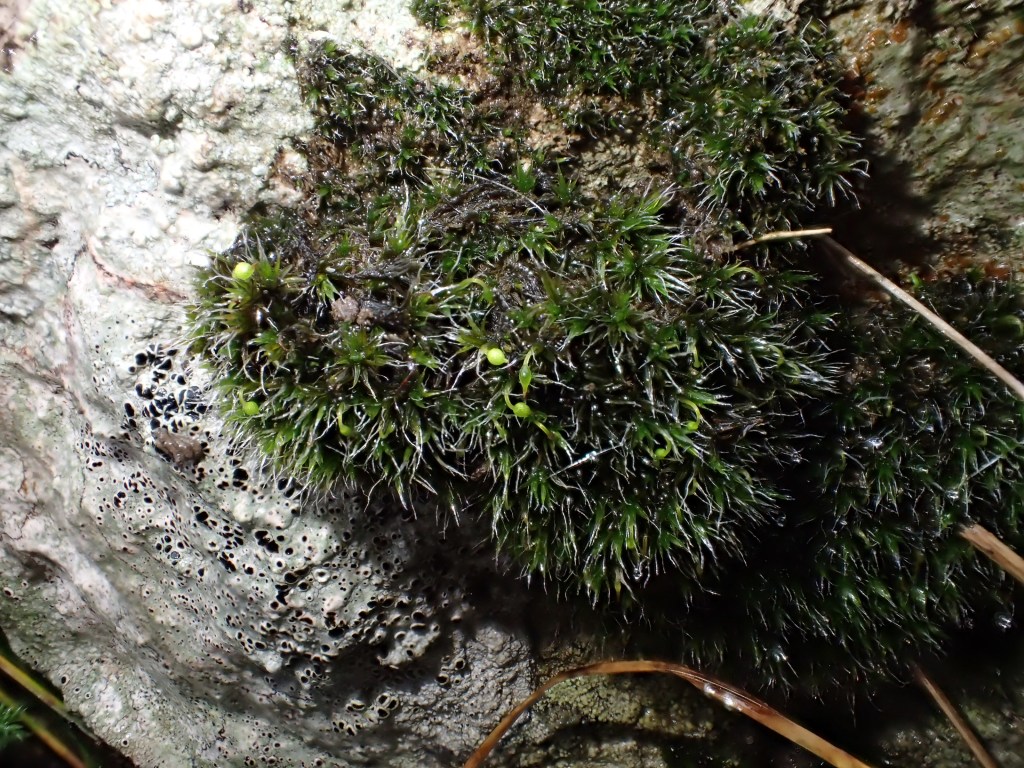

In the British Isles, B. monascus has also been collected on Coscinodon cribosus. One can see typical, subglobose hyphal cells on the hair point in the whole-leaf photograph here: https://www.britishbryologicalsociety.org.uk/learning/species-finder/coscinodon-cribrosus/
It would seem that this fungus is not host specific per se, but niche specific. It likely specialises in consuming cuticular materials deposited over cell walls, not attacking the intracellular environment. Cuticular composition may differ between different host taxa, perhaps selecting for cryptic species to specialise, along with the high likelihood of vertical / self-infection of original host plants (low spore numbers and oozing spore release vs explosive; latter = personal observation).
Further, detailed studies are required to assess the true number of Bryochiton taxa (likely under-estimated), as well as their host ranges. Peter Döbbeler reported B. monascus-like collections on other genera, including Andreaea, Hedwigia, Polytrichum, Pseudoleskeela and Tortella (Döbbeler, 1978). No doubt, he has since found them on other host taxa. What unites these host plants is their longevity, generally, and the deposition of large amounts of cuticle that helps to facilitate this.
Key
Simplified key to the four described Bryochiton species, adapted from Döbbeler (1978). I choose to use ascospore morphology as the chief ID determinant to encourage searching for fruitbodies over merely recording from vegetative hyphae, especially for material on Polytrichum. Host specificity is not strict for B. monascus and B. perpusillus.
1a. Spores 1-septate...................................2a

1b. Spores 2- or 3-septate.............................3a

2a. Spores fusiform, on Gymnomitrion.....B. microscopicus

2b. Spores ellipsoidal with rounded ends, on
    Polytrichaceae and various leafy
    liverworts.............................B. perpusillus

3a. Spores 2-septate, on Polytrichastrum
    sexangulare..........................B. heliotropicus

3b. Spores 3-septate, on Grimmiaceae or
    Polytrichaceae............................B. monascus
References
- Döbbeler, P. (1978). Moosbewohnende Ascomyceten I. Die pyrenocarpen, den Gametophyten besiedelnden Arten. Mitt. Bot. Staatssamml. München, 14: 1-360
- Wäli, P., Huhtinen, S., Pino-Bodas, R. & Stenroos, S. (2014). Three common bryophilous fungi with meristematic anamorphs and phylogenetic alliance to the Teratosphaeriaceae, Capnodiales. Fungal Biology, 118: 956-969
 Bryophilous fungi