Fungi associated with bryophytes in the British Isles
Bryochiton microscopicus
Hosts: Gymnomitrion spp., especially G. obtusum
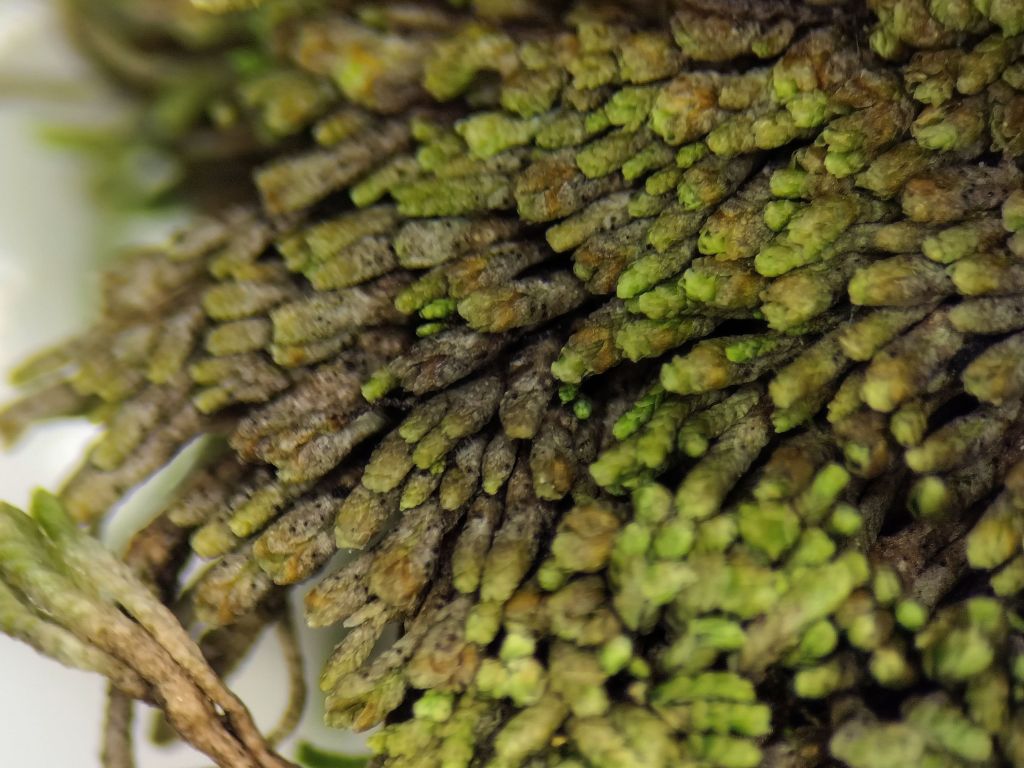
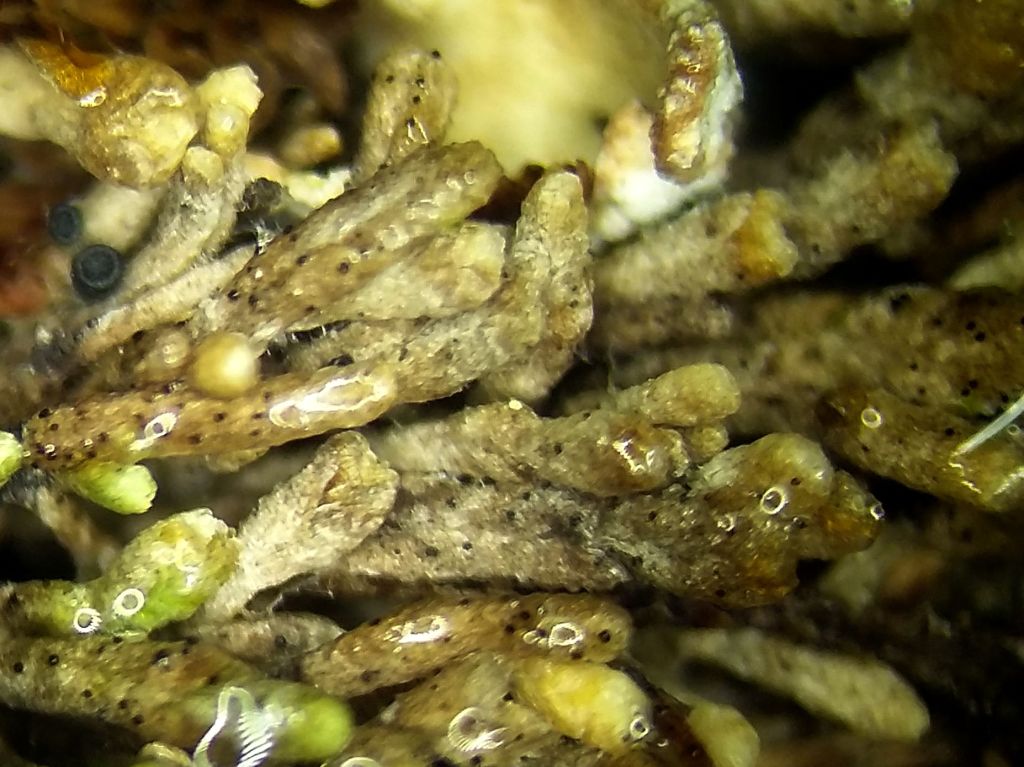
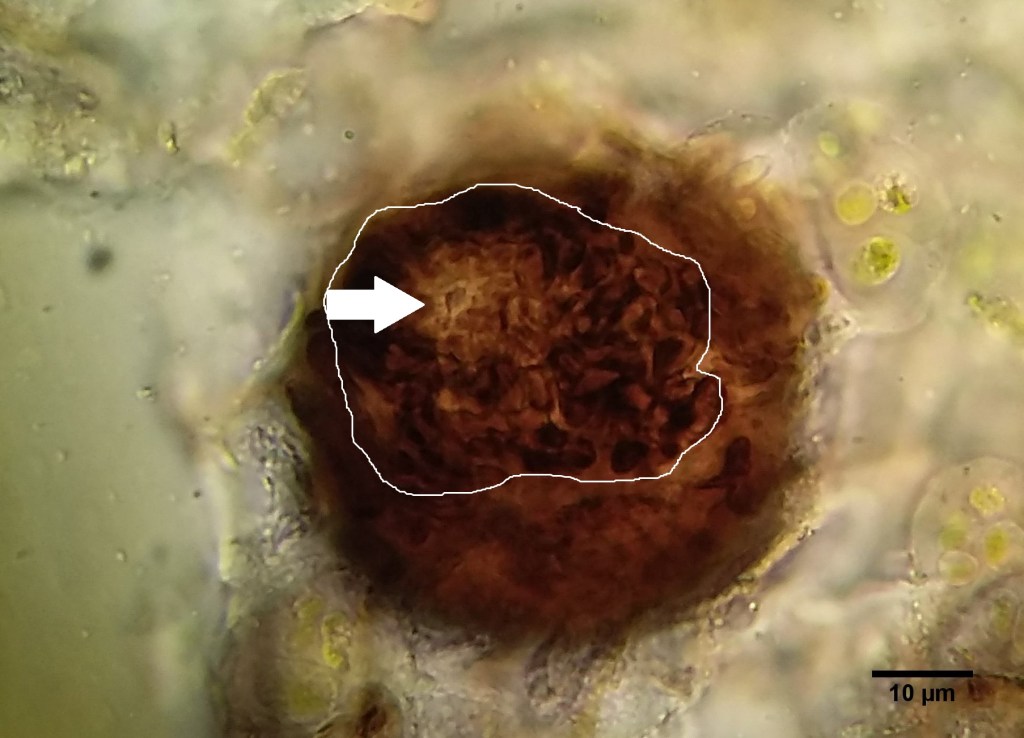
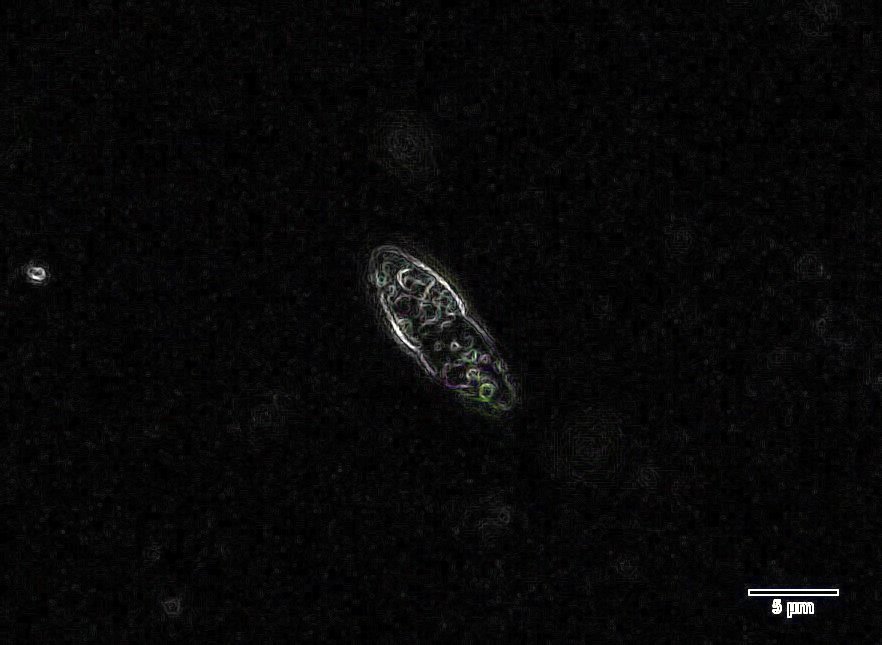
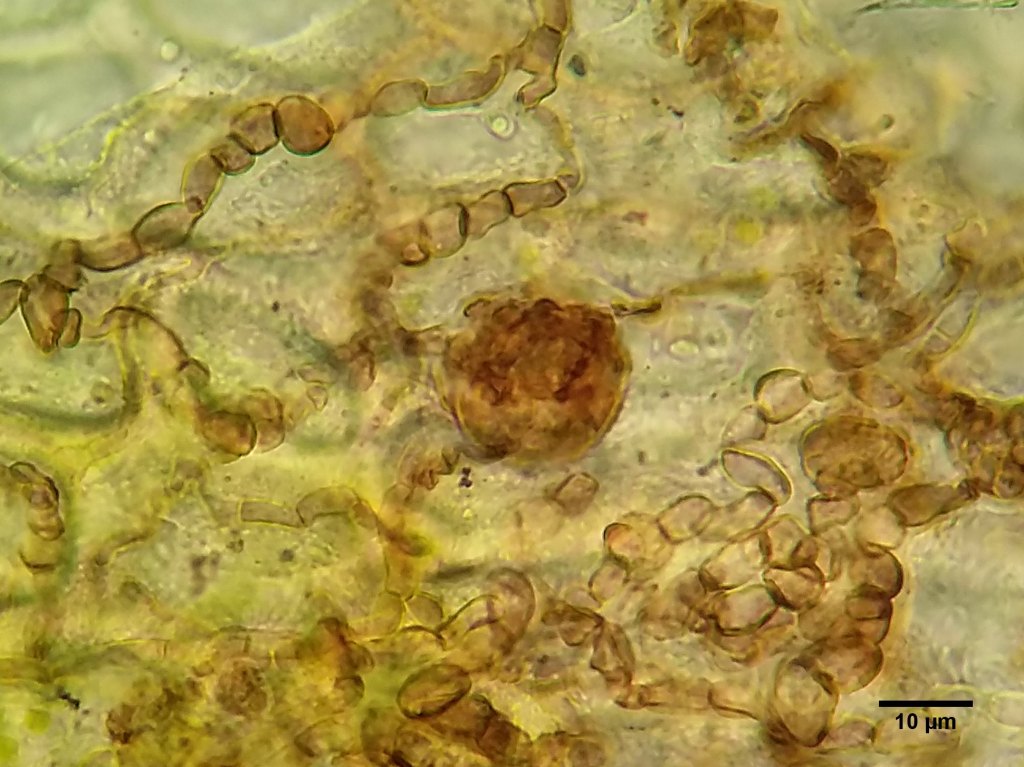
Several dozen fruitbodies on G. obtusum, on lower regions and not the growing green apices. 5-month-old herbarium material (dry) photographed under the dissecting microscope. Merioneth, VC48, Sept 2021Fruitbodies on Gymnomitrion obtusum shoots under dissecting microscope. Merioneth, VC48, Sept 2021A mature fruitbody in water. The pale spot at the top is dissolving cells giving way for the ostiole (tube), which will let the spores disperse. Note the thickened, protruding stubby cells around the neck of the fruitbody. These likely help with additional protection against water loss. Leg., McLennan, C., Cumbria, VC70, March 2022.As per previous annotation. Ostiole (arrowed) and stubby neck cell layer outlined.Brown vegetative hyphae and a fruitbody in water. Leg., McLennan, C., Cumbria, VC70, March 2022.Liberated ascospore in water. Leg., McLennan, C., Cumbria, VC70, March 2022.The above image manipulated using the “find edges” function in imageJ. This highlights the fusiform (spindle) shape of the spore and shows that the two cells are unequal. Young fruitbody primordia forming along hyphal strands. Leg., McLennan, C., Cumbria, VC70, March 2022.Older developing fruitbody compared to the above. Note that the ostiole is already specified for development very early, marked by the paler colour and little hole in the centre. Leg., McLennan, C., Cumbria, VC70, March 2022.
Simplified key to the four described Bryochiton species, adapted from Döbbeler (1978). I choose to use ascospore morphology as the chief ID determinant to encourage searching for fruitbodies over merely recording from vegetative hyphae, especially for material on Polytrichum. Host specificity is not strict for B. monascus and B. perpusillus.
1a. Spores 1-septate...................................2a

1b. Spores 2- or 3-septate.............................3a

2a. Spores fusiform, on Gymnomitrion.....B. microscopicus

2b. Spores ellipsoidal with rounded ends, on
    Polytrichaceae and various leafy
    liverworts.............................B. perpusillus

3a. Spores 2-septate, on Polytrichastrum
    sexangulare..........................B. heliotropicus

3b. Spores 3-septate, on Grimmiaceae or
    Polytrichaceae............................B. monascus
References
Döbbeler, P. (1978). Moosbewohnende Ascomyceten I. Die pyrenocarpen, den Gametophyten besiedelnden Arten. Mitt. Bot. Staatssamml. München, 14: 1-360




 Bryophilous fungi