Hosts: most frequently reported on Radula complanata (England & Scotland), but recorded on Metzgeria furcata (England & Scotland), as well as Porella sp., Lejeunea cavifolia and Frullania dilatata in mainland Europe.
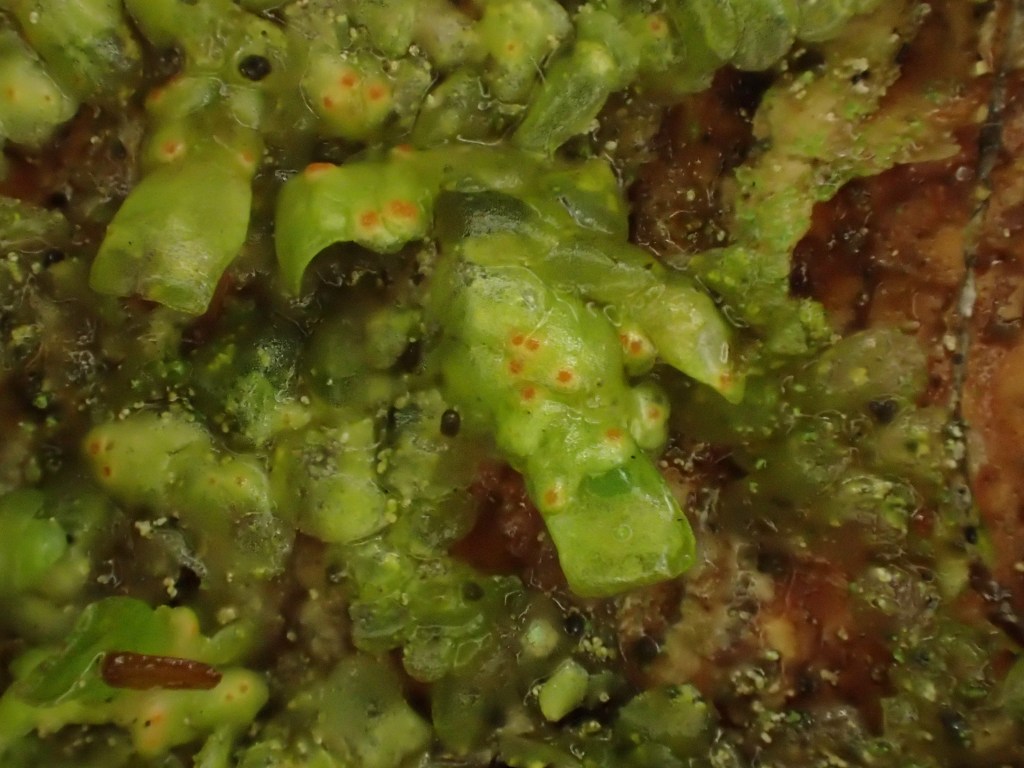
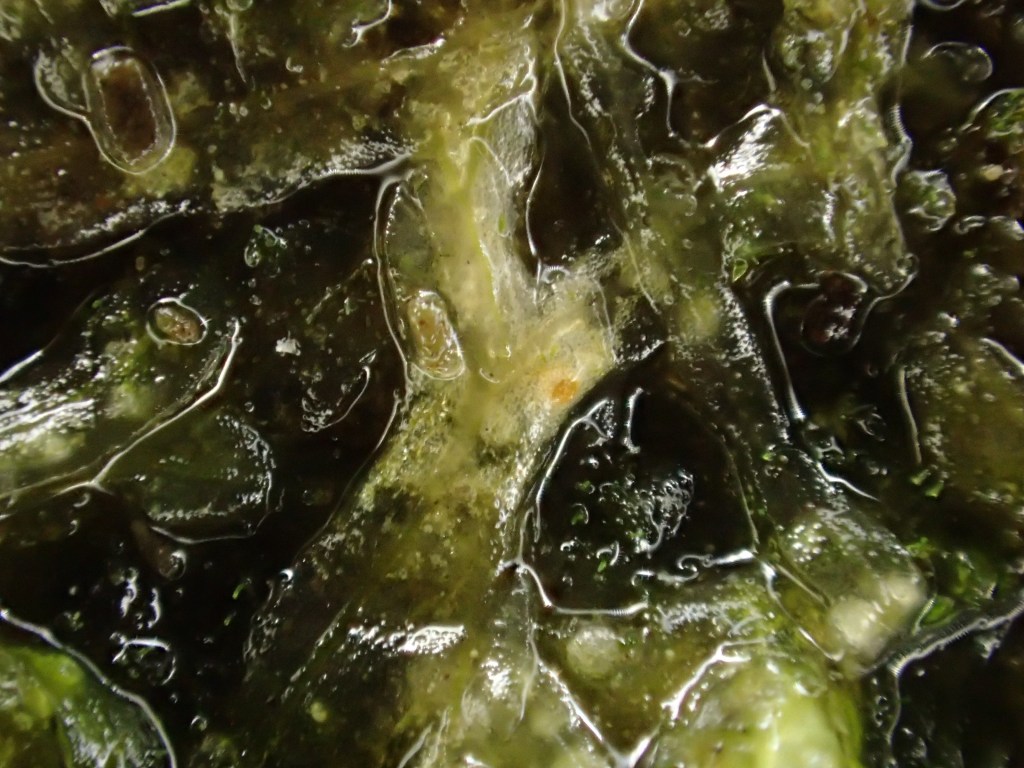
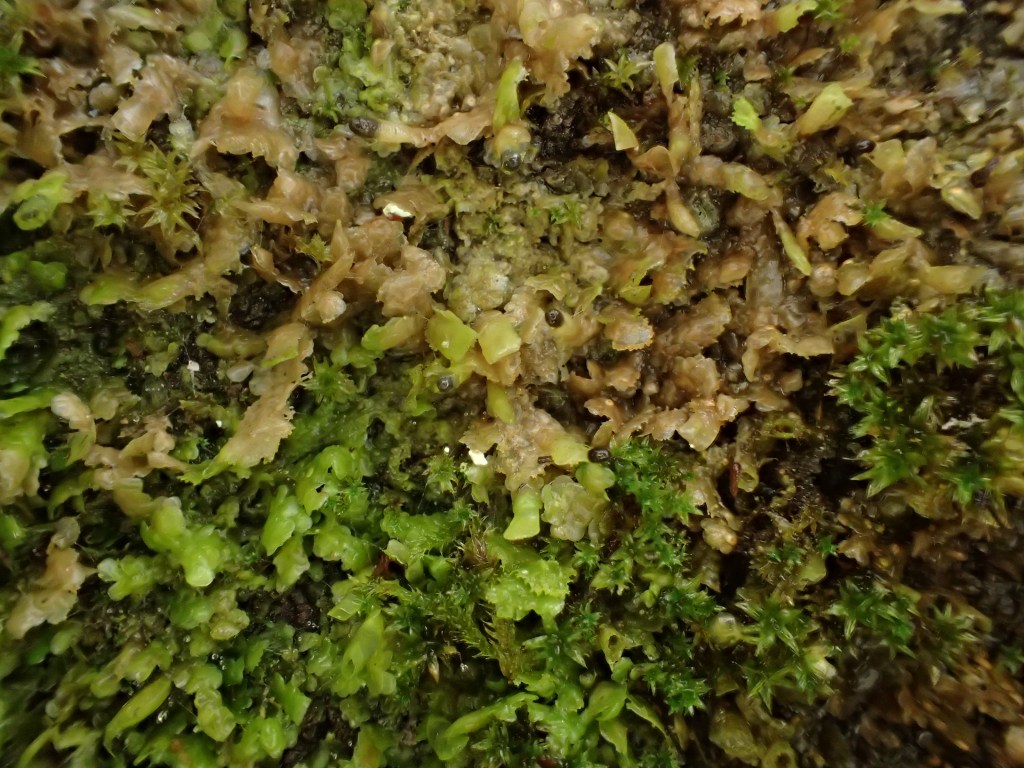
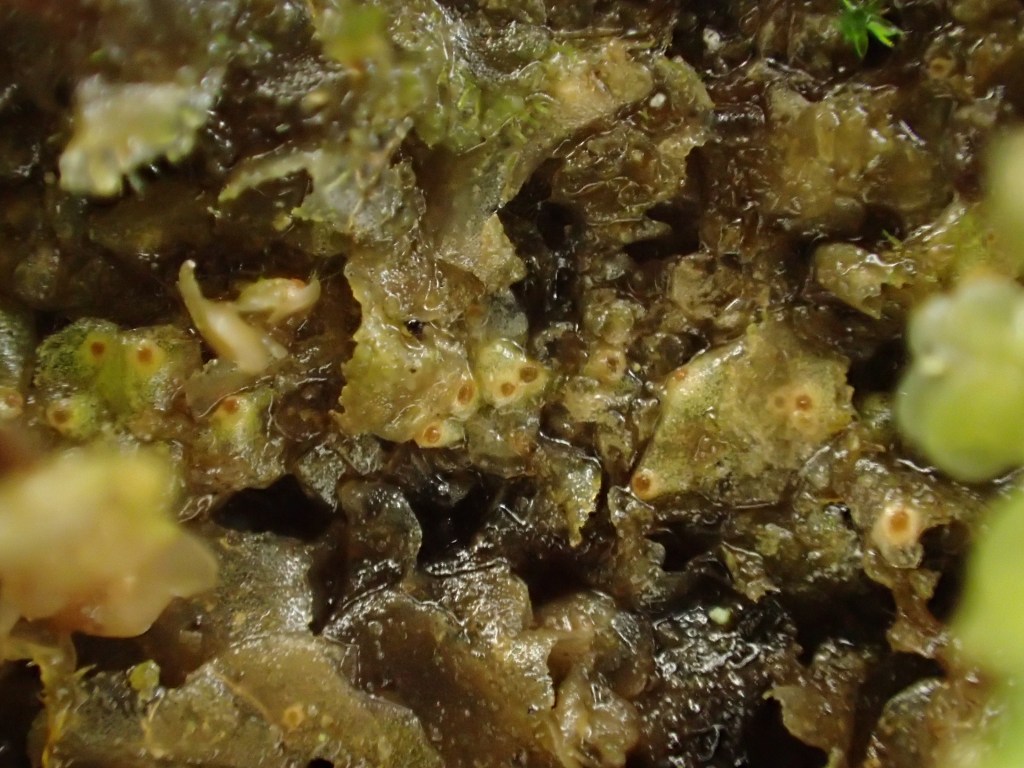
Bryocentria metzgeriae is a necrotrophic parasite that apparently parasitises multiple leafy liverworts, though is collected most often on Radula complanata. In spite of searching hundreds of patches of R. complanata for this parasite, it appears rare. It is now known from two localities in Scotland, on R. complanata and M. furcata respectively, and a single locality in England on both hosts. It seems to be absent from areas with coastal influence.
The perithecia are visible as orange spots under a hand lens in the field, these spots measuring between 1/5-1/4 of a millimetre in width. In the English specimen on Radula complanata, the perithecia were found on thalli below healthy-looking perianths, with the infected areas bleaching.
Microscopically, the 1-septate spores of B. metzgeriae are difficult to visualise well. They are smaller than the other three members of the genus thus far known in the British Isles, being fusiform (spindle-shaped) and possessing a distinct medial band that stains strongly in lactophenol cotton blue. The spores usually measure 5.5-7.5 x 1.5-2μm. The European species with the most similar spores in B. cyanodesma, which parasitises mosses.

 Bryophilous fungi