Hosts: Metzgeria furcata
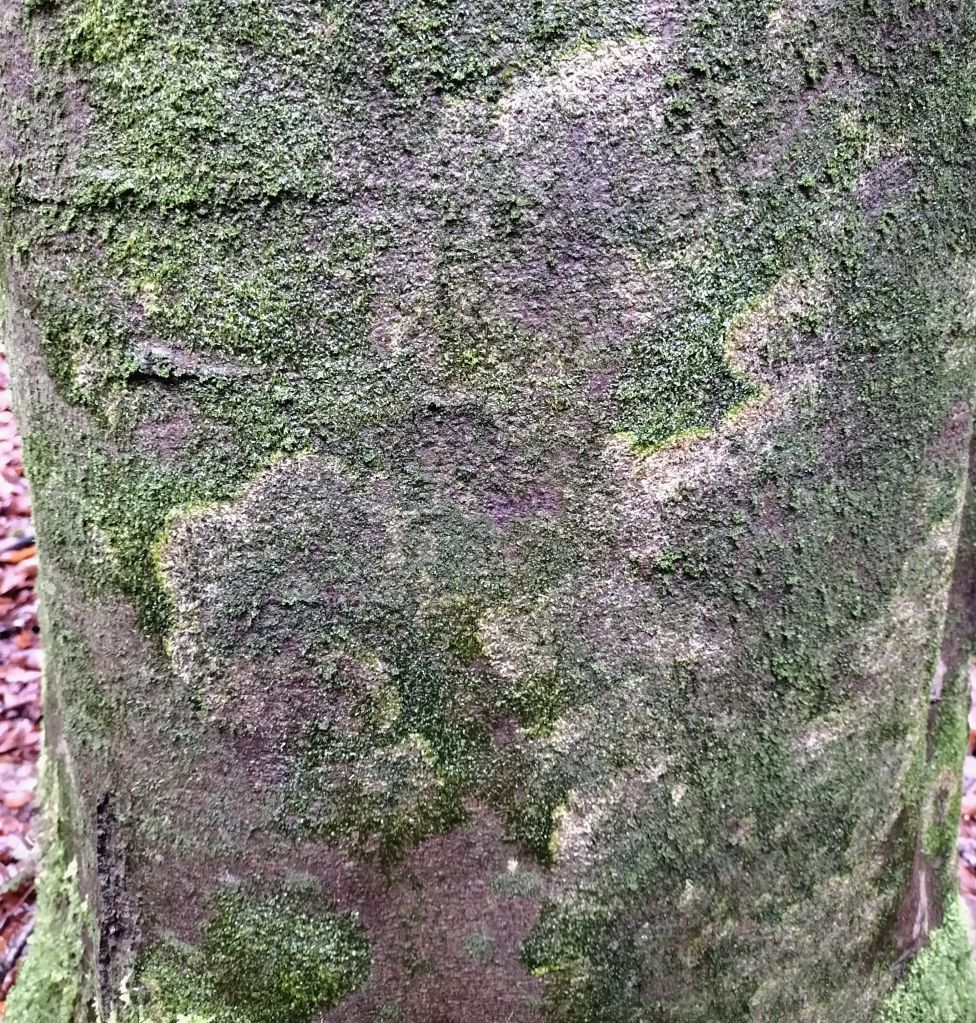
Bryocentria hypothallina is thus far the only teleomorphic ascomycete that has been found on Metzgeria furcata in the British Isles. Like several other members of the genus, orange-yellow perithecia develop on the undersides of infected host shoots and the ostiole perforates through the host cells to disperse spores when the fruitbodies are mature. B. hypothallina is a necrotrophic pathogen, infecting healthy green shoots and killing them after fruitbody development and spore release. Infected host patches are often obvious in the field, showing radiating necrotic patches (see below). Perithecia are often abundant at the borders of such necroses, never (in my experience) on the dead whitish-grey host tissue.
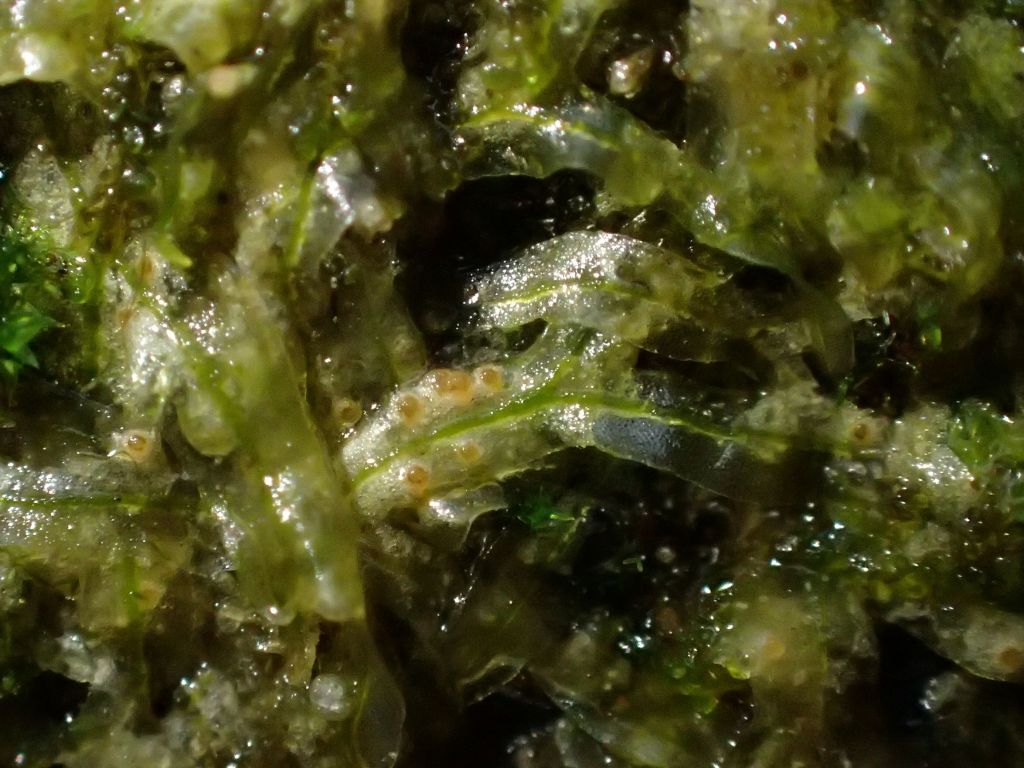
The perithecia of B. hypothallina are visible as yellow-orange spots under a hand lens in the field, measuring up to around 1/5 of a millimetre in diameter. This is around a quarter to a third of the width of the host thallus. Microscopically, the spores are 1-septate, cylindrical with ± rounded ends, and the lack thickened medial bands (stained in lactophenol cotton blue) found in several other species in the genus (E.g., B. brongniartii and B. metzgeriae). Using an oil immersion lens, the exterior walls of the spores are seen to be rough – though this is not always obvious.


Notes on similar species:
Bryocentria metzgeriae is perhaps the most similar in both ecology, as it is also necrotrophic, and shared host preferences. B. metzgeriae is most frequently found on Radula complanata, though collections have been made on Metzgeria furcata, Frullania dilatata, Porella platyphylla and Lejeunea cavifolia (Döbbeler, 2004b). The two are easily distinguished microscopically by the larger spores of B. hypothallina lacking cyanophilous medial bands and being cylindrical rather than fusiform.
“Ilyonectria sp.“, a necrotrophic mould, has been found on a range of epiphytic bryophytes and may be mistaken for Bryocentria hypothallina / metzgeriae in the field based on the radiating necroses it causes. Closer examination of infections of this fungus always contain protruding conidiophores and an aerial mycelium not seen in Bryocentria. No teleomorph of this putative Ilyonectria has been observed in around a dozen collections.
Bryoscyphus “rhombisporus” Baral nom. prov. has been collected on M. furcata in Edinburgh by a correspondent. This fungus is clearly apothecioid, whitish to light brown, and generally larger than any Bryocentria.

 Bryophilous fungi